The best area to stay in Barcelona for first-timers is the Eixample, ideally the stretch around Passeig de Gràcia: it is central, well connected and calmer at night than the old town. If you want medieval lanes on your doorstep, choose El Born or the Gothic Quarter instead. This guide on where to stay in Barcelona compares eight neighborhoods, including the honest downsides of each.
Quick answer
- Best for first-timers: Eixample, near Passeig de Gràcia, with Gaudí buildings and the metro on your doorstep.
- Best for history and atmosphere: El Born, which has the old-town charm of the Gothic Quarter with a little less chaos.
- Best for a local feel: Gràcia, with village-style squares and good restaurants.
- Best for the beach: Barceloneta, though it is busy and far from the Eixample sights.
- Best value: Poble Sec and Sant Antoni. Be selective in El Raval.
Barcelona neighborhoods compared
Each area has a clear personality, so match it to how you want your evenings to feel.
| Area | Best for | Vibe | Downsides |
|---|---|---|---|
| Eixample | First-timers, families, Gaudí | Elegant, grid streets, shopping | Less old-world charm, busy traffic |
| Gothic Quarter | Sightseeing on foot | Medieval lanes, squares, nightlife | Noisy, crowded, pickpockets |
| El Born | Couples, food lovers | Boutiques, tapas, historic | Can be noisy late, small rooms |
| Gràcia | Repeat visitors, local feel | Village squares, independent shops | Farther from the beach and old town |
| Barceloneta | Beach days | Seafront, seafood, summer crowds | Far from the Eixample, very busy in summer |
| Poble Sec | Value, food | Laid-back, tapas bars, near Montjuïc | Hilly, a bit away from the main sights |
| Sant Antoni | Food lovers, value | Trendy market district | Few big sights within the neighborhood |
| El Raval | Budget, nightlife, art | Multicultural, gritty, creative | Some streets feel unsafe at night |
Where should first-timers stay in Barcelona?
First-timers should stay in the Eixample, ideally within a few blocks of Passeig de Gràcia.
Eixample
The Eixample is the 19th-century extension of the city, laid out on a grid with cut-off corners at each block. Its main avenue, Passeig de Gràcia, has Gaudí’s Casa Batlló and Casa Milà (La Pedrera), and the Sagrada Família is in the same district farther east.
You are close to Plaça de Catalunya, the airport bus, and metro lines L2, L3 and L4. The old town is a 10 to 20 minute walk downhill. Streets are wider and evenings quieter than in the old town, which matters if you are a light sleeper.
The Eixample has two halves. The Dreta (right) side, east of Passeig de Gràcia, is more upscale. The Esquerra (left) side, to the west, is more residential. Hotels here are mostly modern rooms inside older apartment buildings. The long-established Majestic Hotel sits right on Passeig de Gràcia if you want a grand, classic option.
The downside is character. The Eixample is handsome but feels more like a business district than a historic quarter, and the main avenues carry heavy traffic.
Best areas in the old town
For history right outside your door, the Gothic Quarter and El Born are the most atmospheric places to stay in Barcelona.
Gothic Quarter (Barri Gòtic)
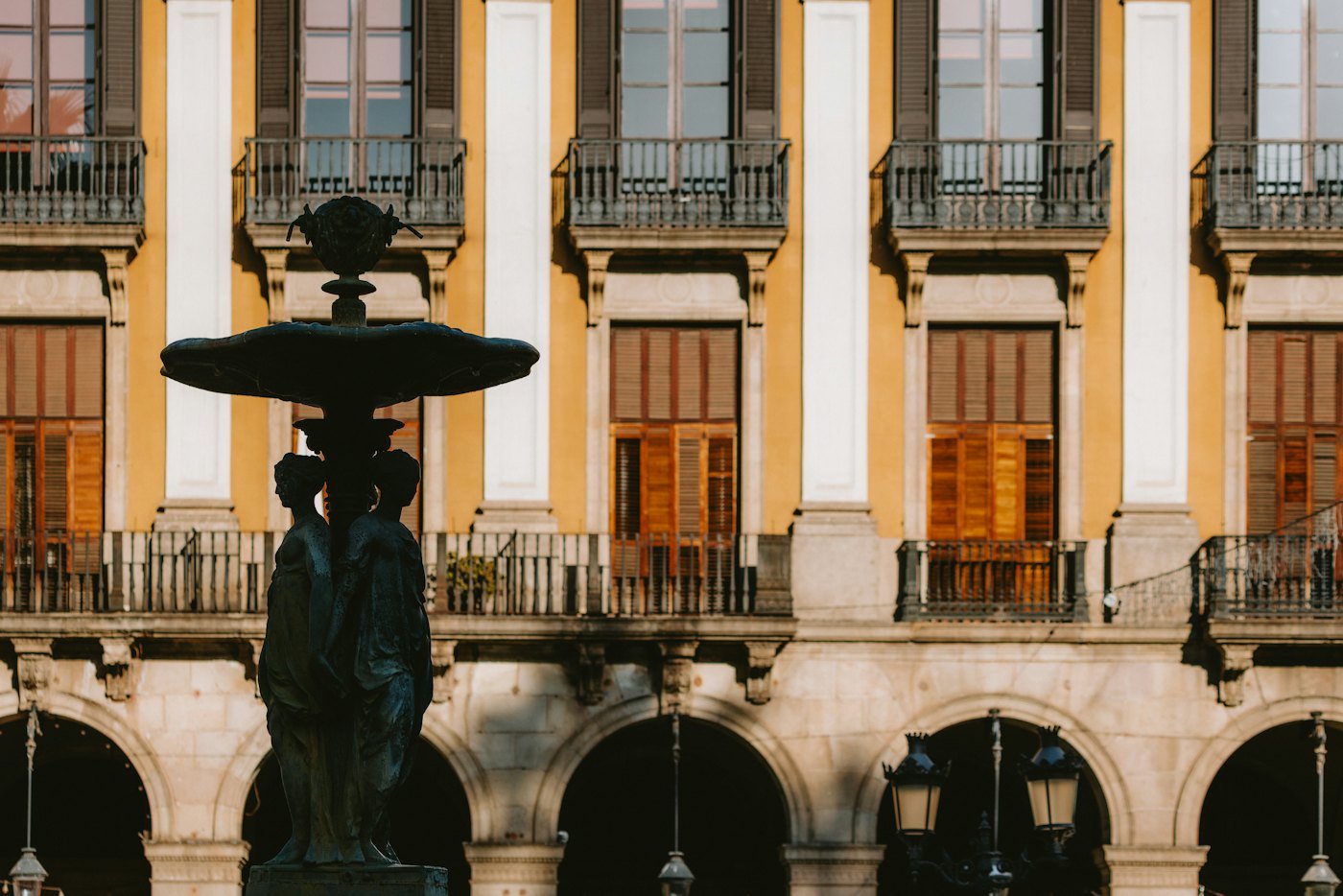
The Gothic Quarter is the medieval heart of the city, with the cathedral, Plaça Sant Jaume and the arcaded Plaça Reial. You can walk to almost everything, including the waterfront and El Born.
The trade-off is noise and crowds. The lanes stay busy late, bars near Plaça Reial are loud, and La Rambla on its western edge is a pickpocket hotspot. Ask for a room at the back or on a higher floor, and look for good soundproofing. Metro stops: Jaume I (L4) and Liceu (L3).
El Born
El Born, across Via Laietana from the Gothic Quarter, has the same narrow lanes but feels a little more grown-up. It is home to the Gothic church of Santa Maria del Mar, the Picasso Museum on Carrer Montcada and plenty of tapas bars, cocktail bars and small shops.
Parc de la Ciutadella and the beach are both within walking distance. Downsides: streets can be noisy on weekend nights, and rooms in old buildings are often small. Metro stops: Jaume I and Barceloneta (both L4).
Where to stay in Barcelona for a local feel
Gràcia is the best choice if you want to feel like you live in Barcelona rather than visit it.
Gràcia
Gràcia was a separate town until the late 19th century, and it still feels like one. It is a grid of narrow streets opening onto small squares such as Plaça del Sol and Plaça de la Virreina, full of locals at outdoor tables in the evening.
It sits just above the top of Passeig de Gràcia, so the Eixample is a short walk away. Park Güell is uphill from the neighborhood. In mid-August, the Festa Major de Gràcia fills the streets with elaborate decorations and concerts. It is great fun, but it is loud and accommodation books up fast.
The modernista Hotel Casa Fuster, at the bottom of Gràcia where it meets Passeig de Gràcia, is a well-known upscale choice. The main downside of Gràcia is distance: the beach and the Gothic Quarter are a metro ride away. Metro: Fontana and Diagonal (L3), or FGC trains to Gràcia station.
Where to stay in Barcelona near the beach
Barceloneta is the obvious base for beach days, but it suits a short stay better than a long one.
Barceloneta
Barceloneta is the old fishermen’s quarter on a triangle of land between the port and the sea. Its long beach starts at the end of the street, and seafood restaurants line the waterfront. The sail-shaped W Barcelona hotel sits at the far end of the beach.
The downsides are real. The beach and promenade get extremely busy in summer, the neighborhood’s narrow streets are mostly residential with limited hotel options, and local frustration with tourist apartments is high. It is also far from the Eixample and Gràcia sights. Metro: Barceloneta (L4).
For a quieter beach base, look further northeast toward Poblenou, where the beaches are calmer.
Best value areas in Barcelona
Poble Sec and Sant Antoni offer better prices and local restaurants while staying within walking distance of the center.
Poble Sec
Poble Sec sits at the foot of Montjuïc, so the hill’s gardens, museums and views are right above you. Carrer de Blai is lined with pintxos bars, and the neighborhood feels relaxed and local. Downsides: some streets climb steeply, and you are a 15 to 25 minute walk from the Gothic Quarter. Metro: Paral·lel (L2, L3) and Poble Sec (L3).
Sant Antoni
Sant Antoni is on the edge of the Eixample, centered on the renovated Mercat de Sant Antoni, which has a secondhand book market on Sunday mornings. The surrounding streets are full of cafés, wine bars and brunch spots. There are few major sights in the neighborhood itself, but the old town and the Eixample are both walkable. Metro: Sant Antoni (L2).
Is El Raval a good place to stay?
El Raval can be a good, central and affordable base, but it is not the right choice for everyone.
On the positive side, it sits right beside La Rambla and the Boqueria market, and its northern part around the MACBA contemporary art museum has galleries, cafés and vintage shops. Prices are often lower than in the Gothic Quarter.
The honest downsides: parts of El Raval, especially its southern streets closer to the port, have long struggled with petty crime, drug dealing and street prostitution. Some blocks feel uncomfortable late at night, and pickpocketing is common. If you choose El Raval, stick to the northern side near the MACBA and read recent reviews about the exact street before booking.
Who each area suits, and who should skip it
Use these lists to narrow your choice quickly.
Choose the old town (Gothic Quarter or El Born) if
- You want to walk out of your door into history.
- You plan to be out late and don’t mind noise.
- You are staying two or three nights and want to maximize sightseeing.
Skip the old town if
- You are a light sleeper or traveling with young children.
- You need a large room or easy car access.
Choose Eixample or Gràcia if
- You want quieter nights and good metro links.
- Gaudí’s buildings and the Sagrada Família are top of your list.
- You are staying longer than a few nights.
Tips for booking accommodation in Barcelona
A few practical checks will make a big difference to your stay.
- Check the metro stop. Lines L3 (green) and L4 (yellow) cover most of the areas above.
- Airport access: the Aerobús runs between the airport and Plaça de Catalunya, and metro line L9 Sud also serves the airport. Staying near Plaça de Catalunya makes arrival easy.
- Arriving by train? High-speed trains from Madrid and France use Barcelona Sants, west of the center. It is on metro lines L3 and L5.
- Tourist tax: Barcelona charges a city tourist tax per night on top of the room rate. Check the current amount with your hotel.
- Licensed apartments only: the city has been cutting back on tourist apartment licenses. Book only properties that display a valid license number.
- Summer heat: air conditioning is not universal in older buildings, so check before you book for July or August.
Once you have your base, plan your days with our guide to the best things to do in Barcelona, including the Sagrada Família, Park Güell and a Montserrat day trip. If you are also visiting Paris, compare areas in our guide to where to stay in Paris, or see how to make a short stay count with our 2 days in Paris itinerary. Comparing southern European cities? Our guides to where to stay in Lisbon and where to stay in Rome use the same approach. For more in Spain, see our Spain travel guides, including Madrid.
FAQ
What is the best area to stay in Barcelona for first-time visitors?
The Eixample, near Passeig de Gràcia, is the best area for first-timers. It is central, generally calm at night, well connected by metro and close to Gaudí’s major buildings.
Is it better to stay in the Gothic Quarter or Eixample?
Stay in the Gothic Quarter for atmosphere and walkability to the old town, and in the Eixample for quieter nights, bigger rooms and better metro links. Light sleepers usually prefer the Eixample.
What area should I avoid staying in Barcelona?
No central area is off limits, but be careful in the southern part of El Raval, which can feel uncomfortable at night. Also avoid rooms directly on La Rambla if you want quiet.
Is it worth staying near the beach in Barcelona?
Only if beach time is your priority. Barceloneta is lively but crowded in summer and far from the Eixample sights, so most visitors are better off staying central and taking the metro to the beach.
How many days do you need in Barcelona?
Three to four days covers the main sights, the old town and some beach time. Add a day for a Montserrat trip.