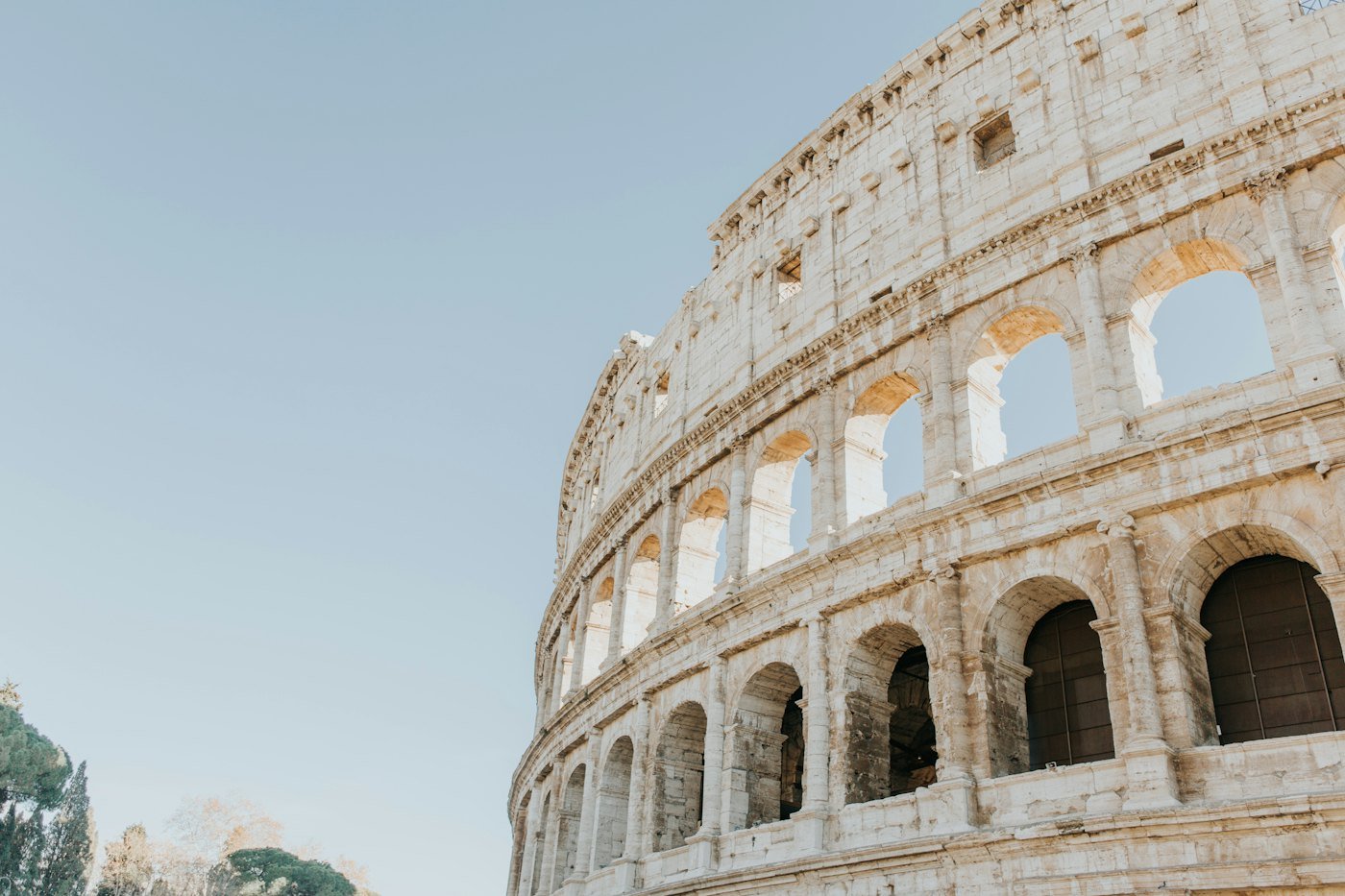
The best area to stay in Rome for first-timers is the Centro Storico, the historic center around the Pantheon and Piazza Navona, because you can walk to most of the major sights and step out into the old streets every evening. Monti is the best pick if you want to be near the Colosseum with a more local feel, and Prati is the calm, practical choice for the Vatican. Rome is large and its metro skips much of the old center, so where you sleep shapes how much you walk each day.
Quick answer
- First visit: Centro Storico, around the Pantheon, Piazza Navona and Campo de’ Fiori.
- Near the Colosseum with character: Monti.
- Evenings out and cobbled lanes: Trastevere.
- Quiet nights near the Vatican: Prati.
- Trains, airport links and budget: Termini and Esquilino.
How Rome is laid out
Most of what visitors want to see is spread across a fairly wide area, and the metro only touches its edges.
The Centro Storico sits in a bend of the Tiber river. The Colosseum and the Roman Forum are to its south-east, the Vatican and St Peter’s are across the river to the north-west, and Trastevere is across the river to the south. Termini, the main station, is to the east.
Rome has two main metro lines that tourists use. Line A runs past Termini, Piazza di Spagna and Ottaviano near the Vatican. Line B runs past Termini, the Colosseum and Piramide. Neither runs through the Pantheon and Piazza Navona area, so you will walk or take a bus or tram there. A third line, C, is being extended toward the center, but check its current status before relying on it.
Rome is usually the start or end of a bigger route. Our Italy itinerary shows how many nights to spend here before heading to Florence, Venice or the Amalfi Coast.
Where should first-timers stay in Rome?
Stay in the Centro Storico if you want to walk to the most famous sights and enjoy the city after dark.
Centro Storico
This is the Rome of postcards: the Pantheon, Piazza Navona, Campo de’ Fiori and the Trevi Fountain, linked by narrow streets full of cafés and churches. From here, the Colosseum is about a 20 to 30 minute walk and the Vatican about the same in the other direction.
The downsides are crowds around the big sights, higher prices and some noise from late-night restaurants and street cleaning. Rooms in old buildings can be small. It is still the area that most first-time visitors are happiest with.
Spanish Steps and the Tridente
The Tridente is the triangle of streets between Piazza del Popolo and the Spanish Steps, formed by Via del Corso, Via del Babuino and Via di Ripetta. It is Rome’s smartest shopping area, with luxury boutiques on Via dei Condotti. The Spagna and Flaminio stops on Line A make it one of the best-connected central areas.
It is polished and convenient but quieter and more formal in the evening than the streets around Piazza Navona. Two of Rome’s best-known grand hotels are here: the Hotel Hassler, at the top of the Spanish Steps, and the Hotel de Russie, on Via del Babuino near Piazza del Popolo.
Is Monti a good area to stay in Rome?
Yes. Monti is one of the best neighborhoods in Rome for combining a central location with a local atmosphere.
Monti sits between the Colosseum and Termini, a short walk from the Roman Forum. Its streets, including Via Urbana and Via del Boschetto, are full of small restaurants, wine bars and independent shops. Piazza della Madonna dei Monti, with its fountain, is where locals gather in the evening. The Cavor stop on Line B is in the neighborhood.
It gets busy at night around the main square and can be hilly in places. The Pantheon is about a 20 minute walk away.
Is it better to stay in Trastevere?
Trastevere is the best area for atmosphere and evenings out, but it is not the most practical base.
Across the river from the center, Trastevere has ivy-covered buildings, cobbled lanes and Santa Maria in Trastevere, one of the oldest churches in Rome. It is full of trattorias and bars, and it stays lively late into the night.
There is no metro, and the walk to the Colosseum or the Vatican is long. Tram 8 runs from Trastevere across the river toward Largo di Torre Argentina, near the Pantheon. The busiest streets are noisy at night, especially on weekends. Light sleepers should look at the quieter streets on the far side of Viale di Trastevere or choose another area.
Where to stay in Rome near the Vatican
Prati is the best area for travelers who want to be close to the Vatican and sleep in a quiet, orderly neighborhood.
Prati
Prati sits just east of the Vatican, with wide, tree-lined streets and late 19th-century buildings. Via Cola di Rienzo is its main shopping street. The Ottaviano and Lepanto stops on Line A link it with the Spanish Steps and Termini.
It has good restaurants for locals, but less of the historic atmosphere you get in the Centro Storico. It suits families, repeat visitors and anyone who wants a calmer night’s sleep. The Vatican Museums are easier with an early timed ticket, so book ahead through the official Vatican site.
Is it safe to stay near Termini station?
Staying near Termini is generally fine and very convenient, but the streets right around the station feel rough at night, so choose carefully.
Termini and Esquilino
Termini is Rome’s main station. Both metro lines meet here, high-speed trains leave for Florence, Naples, Venice and Milan, and the Leonardo Express runs non-stop to Fiumicino airport in about 30 minutes. Hotel prices are usually lower than in the center.
The trade-off is atmosphere and comfort at night. The streets around the station attract pickpockets, and some blocks to the south in Esquilino feel run down after dark. The area around the basilica of Santa Maria Maggiore is more pleasant, and the north side of the station toward Via XX Settembre is generally calmer.
Where to stay in Rome for food lovers
Testaccio is the best area for food and a working neighborhood feel.
Testaccio
Testaccio grew up around Rome’s old slaughterhouse, and its trattorias are known for traditional Roman dishes. The covered Mercato di Testaccio is a good place for lunch. The Pyramid of Cestius and the Piramide stop on Line B are at its edge, alongside Roma Ostiense station.
It is residential and fairly quiet, with few sights of its own. Aventine Hill, with its orange garden and views, is next door.
Rome neighborhoods compared
| Area | Best for | Vibe | Downsides |
|---|---|---|---|
| Centro Storico | First visit, walking | Historic, atmospheric | Crowds, prices, no metro |
| Spanish Steps / Tridente | Shopping, metro access | Elegant, polished | Formal, quieter evenings |
| Monti | Colosseum, local feel | Independent, lively | Busy square at night |
| Trastevere | Nightlife, food | Cobbled, social | No metro, noise |
| Prati | Vatican, families | Calm, residential | Less historic character |
| Termini / Esquilino | Trains, airport, budget | Practical, mixed | Rough streets at night |
| Testaccio | Food, repeat visits | Local, working-class roots | Few big sights nearby |
Who should stay in the historic center, and who should skip it?
The center is the best choice for most first trips, but not for everyone.
Stay in the Centro Storico or Monti if you:
- Have two to four nights and want to walk to the main sights.
- Enjoy evening walks and eating out late.
- Don’t mind smaller rooms in older buildings.
Skip it for Prati, Testaccio or Termini if you:
- Are traveling with young children and need quiet nights.
- Arrive late or leave early by train or from Fiumicino.
- Have visited before and want a more local base.
Practical tips for booking a hotel in Rome
Look at your daily route, not just the hotel’s distance from the Colosseum.
- Book the big sights first. The Colosseum and the Vatican Museums use timed tickets that sell out in high season. Check the official sites for current rules.
- Expect a city tourist tax. Rome charges it per person per night, and it is usually paid at the hotel.
- Bring comfortable shoes. Cobblestones and long distances add up, even with a central base.
- Check air conditioning. Summers are very hot, and older buildings hold the heat.
Rome is also the gateway to the south. High-speed trains reach Naples in a little over an hour, which makes it the jumping-off point for Pompeii and the Amalfi Coast. Heading north instead? See where to stay in Florence, about 90 minutes away by fast train, and our guides to Venice and Milan. If you are comparing big-city breaks, our Paris neighborhood guide follows the same format.
Where to stay in Rome: FAQ
What is the best area to stay in Rome for first-time visitors?
The Centro Storico around the Pantheon and Piazza Navona is the best area for a first visit. Monti is an excellent alternative if you want to be close to the Colosseum.
Is Trastevere a good place to stay in Rome?
Trastevere is great for atmosphere, food and nightlife. It has no metro and can be noisy, so it suits travelers who enjoy evenings out more than early starts.
How many days do you need in Rome?
Three full days is a good minimum to see the ancient sites, the Vatican and the historic center without rushing. Four or five days lets you add neighborhoods like Trastevere and Testaccio, or a day trip.
Is it better to stay near the Colosseum or the Vatican?
Neither is ideal on its own, because the main sights sit between them. The Centro Storico or Monti gives you the best balance, while Prati makes sense if the Vatican is your priority.
Is Prati a safe area to stay in Rome?
Prati is one of the calmest and most orderly central neighborhoods in Rome. It is a good choice for families and anyone who wants quiet nights near the Vatican.
Keep planning your Italy trip
Rome connects quickly by train to the rest of Italy. These guides help you plan the next stops: