The best things to do in Barcelona are visiting the Sagrada Família (book well ahead), Park Güell and Casa Batlló, getting lost in the Gothic Quarter and El Born, and spending an afternoon on Montjuïc. Add a beach day, a morning at the Boqueria market and a sunset at the Bunkers del Carmel, and you have a full first trip. If you have an extra day, Montserrat is the classic day trip. Here are 18 things to do, with what to book and how long each takes.
Quick answer
- Top three: the Sagrada Família, Park Güell and the Gothic Quarter.
- Book ahead: the Sagrada Família, Park Güell, Casa Batlló and La Pedrera all use timed tickets, and popular slots sell out.
- Best free things: the Gothic Quarter, El Born, the beaches, Montjuïc’s gardens and the Bunkers del Carmel.
- Best day trip: Montserrat, about an hour or so away by train.
- Time needed: three to four days for the highlights, plus one for Montserrat.
What are the best things to do in Barcelona?
The best things to do in Barcelona mix Gaudí’s buildings, the medieval old town, Montjuïc and the city beaches.
Most visitors spend a lot of time on Gaudí, and rightly so. Balance his buildings with time in the old town and on the waterfront, where Barcelona is at its most relaxed.
1. Sagrada Família
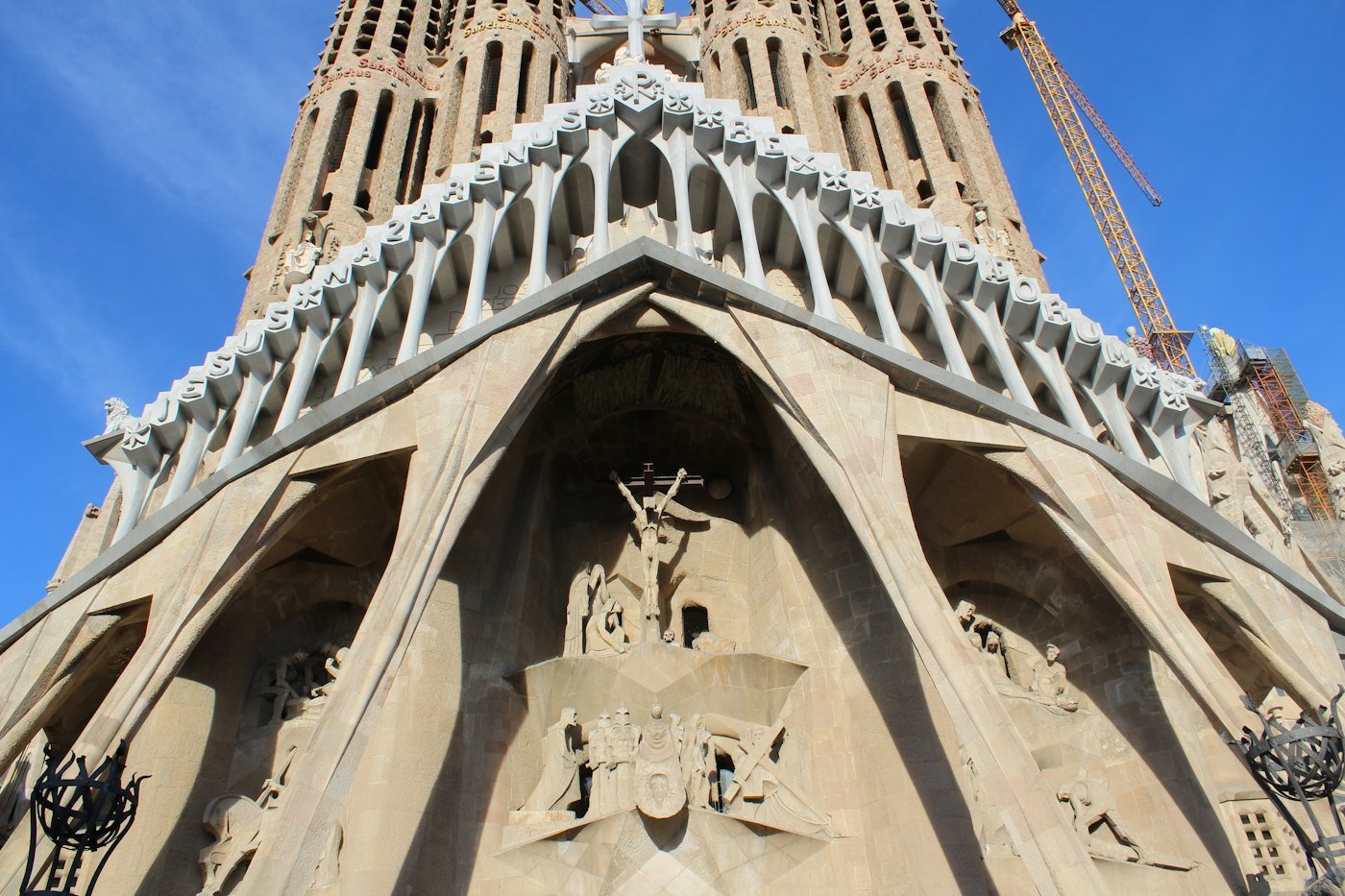
Gaudí’s basilica has been under construction since 1882 and is still being finished, and it is the one sight you should not miss. The interior, with its tree-like columns and colored light from the stained glass, is even more striking than the outside.
Tickets are timed and sold online, and tower access is a separate add-on. Book as early as you can, especially for spring and summer. Morning light brings cool blues and greens through the eastern windows, while late afternoon brings warm reds and oranges through the western ones.
2. Park Güell
Park Güell, on a hill above Gràcia, is where you will find Gaudí’s mosaic-covered terrace, the famous dragon fountain and the gingerbread-style gatehouses. The central Monumental Zone requires a timed ticket, so book online before you go.
It is a steep walk up from the nearest metro stops, Lesseps and Vallcarca (L3). Plenty of visitors take a bus or taxi to the upper entrance and walk down instead.
3. Casa Batlló
Casa Batlló on Passeig de Gràcia is Gaudí’s most playful building, with a facade of colored glass and balconies shaped like masks and a roof like a dragon’s back. The inside visit is self-guided with a device, and it is popular, so book a slot.
4. La Pedrera (Casa Milà)
A few blocks up the same avenue, Casa Milà, better known as La Pedrera, has a rippling stone facade and a rooftop of sculpted chimneys. If you only have time for one Gaudí house interior, many people choose this one for the roof. Book ahead.
Things to do in Barcelona’s old town
The old town is best explored on foot, with no plan beyond a few landmarks.
5. The Gothic Quarter
The Barri Gòtic is a maze of medieval lanes around Barcelona Cathedral. Look for the carved Pont del Bisbe bridge on Carrer del Bisbe, the quiet Plaça de Sant Felip Neri, and the arcaded Plaça Reial, whose lampposts were designed by a young Gaudí. Go early in the morning to see the streets before the crowds arrive.
6. El Born and Santa Maria del Mar
Across Via Laietana, El Born has some of the best bars and shops in the city. Its centerpiece is Santa Maria del Mar, a soaring Catalan Gothic church. Nearby, the Picasso Museum on Carrer Montcada focuses on the artist’s early years, much of them spent in Barcelona. Book a time slot online.
7. La Boqueria market
La Boqueria, just off La Rambla, is Barcelona’s most famous food market. Go in the morning, when it is busy with locals and the stalls are fully stocked, and eat at one of the counter bars. It is closed on Sundays. Watch your bag, as both the market and La Rambla are pickpocket hotspots.
8. Palau de la Música Catalana
This UNESCO-listed concert hall, designed by Lluís Domènech i Montaner, is the best example of Catalan modernisme after Gaudí’s work. The stained-glass skylight is the highlight. Take a guided tour or, better, book a concert ticket.
Montjuïc, the beaches and the viewpoints
For space, views and a break from the crowds, head up Montjuïc or down to the sea.
9. Montjuïc
Montjuïc is the hill above the port, and it deserves at least half a day. Ride the funicular from Paral·lel metro station, then continue on the Montjuïc cable car to the castle at the top. The views over the port are excellent.
On the way down, visit the Fundació Joan Miró and the National Art Museum of Catalonia (MNAC), which has a superb collection of Romanesque church murals. The Olympic Ring from the 1992 Games is also here. The Magic Fountain below the MNAC hosts evening light shows, but the schedule varies and has been suspended during droughts, so check the official site.
10. The beaches
Barcelona’s city beaches run northeast from Barceloneta. Barceloneta is the liveliest and most crowded. Bogatell and Nova Icària, a little further along, are usually calmer. Never leave your things unattended on the sand.
11. Bunkers del Carmel
The Spanish Civil War anti-aircraft battery on Turó de la Rovira is now the best free viewpoint in the city, with a 360-degree panorama from the sea to the mountains. It is famous for sunset, which means it gets crowded. Access rules have tightened in recent years, so check current opening hours before you go.
12. Tibidabo
Tibidabo is the highest point of the Collserola hills behind the city, topped by the Temple of the Sacred Heart and an old-fashioned amusement park. On a clear day the view is the widest in Barcelona. Getting there by public transport and the funicular takes a while, so plan for half a day.
More of Barcelona’s best things to do
If you have three or four days, these fill out a trip nicely.
13. Sant Pau Recinte Modernista
This former hospital complex, also by Domènech i Montaner, is a UNESCO site of tiled pavilions and gardens. It is far quieter than the Gaudí sights and is a short walk up Avinguda de Gaudí from the Sagrada Família.
14. Casa Vicens
Gaudí’s first house, in Gràcia, is a colorful, tiled building with Moorish influences. It shows where his style began and is usually much less crowded than his later houses.
15. Gràcia’s squares
Spend an evening in Gràcia, moving between squares like Plaça del Sol and Plaça de la Virreina. In mid-August, the Festa Major de Gràcia turns its streets into competing decorated installations.
16. Parc de la Ciutadella
The city’s main central park has a lake with rowing boats and the monumental Cascada fountain. Enter through the brick Arc de Triomf, built for the 1888 Universal Exhibition.
17. Tapas in Poble Sec and Sant Antoni
Carrer de Blai in Poble Sec is lined with pintxos bars, and Sant Antoni’s streets around its market are full of wine bars and vermouth spots. Locals often have vermut on weekend afternoons.
18. Montserrat day trip
Montserrat is a Benedictine monastery set among jagged mountains about an hour or so northwest of Barcelona. Take the R5 train from Plaça d’Espanya, then the rack railway or the cable car up to the monastery. See the Black Madonna (La Moreneta) in the basilica, then walk one of the mountain trails or take a funicular higher for views. Check the boys’ choir (Escolania) schedule if you want to hear them sing.
Barcelona sights compared
Use this table to plan what to book and how much time to give each sight.
| Sight | Area | Book ahead? | Time needed |
|---|---|---|---|
| Sagrada Família | Eixample | Yes, essential | 1.5 to 2 hours |
| Park Güell | Above Gràcia | Yes, timed tickets | 1.5 to 2 hours |
| Casa Batlló | Passeig de Gràcia | Recommended | About 1 to 1.5 hours |
| La Pedrera | Passeig de Gràcia | Recommended | About 1 to 1.5 hours |
| Gothic Quarter and El Born | Old town | No | Half a day |
| Montjuïc | Above the port | Only for museums | Half a day |
| Bunkers del Carmel | El Carmel | No, but check hours | 1 to 2 hours |
| Montserrat | Outside the city | Helpful for trains and combo tickets | Full day |
Who Barcelona suits, and who should plan carefully
Barcelona suits most travelers, but its crowds and popularity need some planning.
It suits
- Architecture and art lovers, especially fans of Gaudí and modernisme.
- Travelers who want a city break with a beach attached.
- Food lovers, from market counters to late-night tapas.
Plan carefully if
- You travel in July or August. It is hot and very crowded, so book everything ahead and plan indoor visits for midday.
- You hate lines. Book timed entries for every Gaudí site, and arrive at opening time.
- You are nervous about petty crime. Use a zipped bag and keep your phone off café tables, especially on La Rambla and the metro.
Tips for getting around Barcelona
The metro, walking and the occasional bus cover nearly everything on this list.
- Metro: L3 (green) connects the old town, Passeig de Gràcia, Gràcia and Poble Sec. L4 (yellow) serves the Gothic Quarter, El Born and Barceloneta. L2 and L5 stop at the Sagrada Família.
- Tickets: the T-casual card gives one person ten trips and is sold at any metro station. Check TMB’s official site for current fares and passes.
- Walking: the old town, El Born and the Eixample are all walkable from each other.
- Timing: Spaniards eat late. Lunch is often around 2 p.m. and dinner after 9 p.m., so plan sightseeing around that.
Choosing a base? Our guide to where to stay in Barcelona compares eight neighborhoods with honest pros and cons. If Barcelona is part of a bigger trip, see our 2 days in Paris itinerary for the high-speed train connection north, our list of things to do in Amsterdam, or the best things to do in Lisbon if you are continuing to Portugal. For more of the country, see our Spain travel guides, including Madrid.
FAQ
What is the number one thing to do in Barcelona?
The Sagrada Família. Gaudí’s unfinished basilica is the city’s most famous sight, and the interior is unlike any other church in Europe. Book tickets online well in advance.
How many days do you need in Barcelona?
Three to four days is enough for the main Gaudí sights, the old town, Montjuïc and some beach time. Add a fifth day for Montserrat.
Do you need to book Park Güell in advance?
Yes. The Monumental Zone with the mosaic terrace and dragon fountain uses timed tickets, and popular slots sell out. Book on the official site.
What are the best free things to do in Barcelona?
Walking the Gothic Quarter and El Born, the city beaches, Montjuïc’s gardens, Parc de la Ciutadella and the Bunkers del Carmel viewpoint all cost nothing.
Is Montserrat worth a day trip from Barcelona?
Yes, especially if you like mountains and hiking. The monastery and the rock formations are impressive, and the trip by train and rack railway is part of the fun.