The best things to do in Lisbon are wandering Alfama up to São Jorge Castle, visiting the monuments of Belém, watching the city from its miradouros (viewpoints), and hearing live fado in the evening. Add a day trip to Sintra and a meal at a riverside market, and you’ve covered the essentials. This list gives you 18 things to do, grouped by area so you can plan days that don’t zigzag across the hills.
Quick answer
- Don’t miss: Alfama, São Jorge Castle, Belém (Jerónimos Monastery and Belém Tower) and at least two miradouros.
- Best experience: an evening of fado in Alfama or Mouraria.
- Best day trip: Sintra, about 40 minutes by train from Rossio station.
- Book ahead: Jerónimos Monastery, Sintra’s palaces and popular fado houses in high season.
- Time needed: three days for the city, four with Sintra.
What are the best things to do in Lisbon on a first visit?
On a first trip, focus on four areas: Alfama, Baixa/Chiado, Belém and the viewpoints, then add Sintra if you have a fourth day.
Lisbon’s main sights are spread across hills and along the river, so it helps to group them. Alfama and the castle fill a morning, Belém needs half a day, and the viewpoints work best in the late afternoon. If you haven’t booked your base yet, our guide to where to stay in Lisbon explains which neighborhoods make this easiest.
Alfama, the castle and the old town
Start in Alfama, Lisbon’s oldest neighborhood, and work your way up to the castle and viewpoints.
1. Get lost in Alfama
Alfama is a maze of lanes, stairways and small squares running down from the castle to the river. Go in the morning, when it’s quieter, and don’t worry about following a route. Laundry lines, tiled facades and tiny grocery shops are the point.
2. Visit São Jorge Castle
Castelo de São Jorge sits on the highest hill in the old town, with walls you can walk along and wide views over the river and rooftops. Lines can be long in summer, so buy tickets ahead and go early.
3. See Lisbon Cathedral (Sé)
The Sé is the city’s oldest church, a fortress-like Romanesque building on the way up from Baixa to Alfama. It takes about 30 minutes and pairs naturally with the castle.
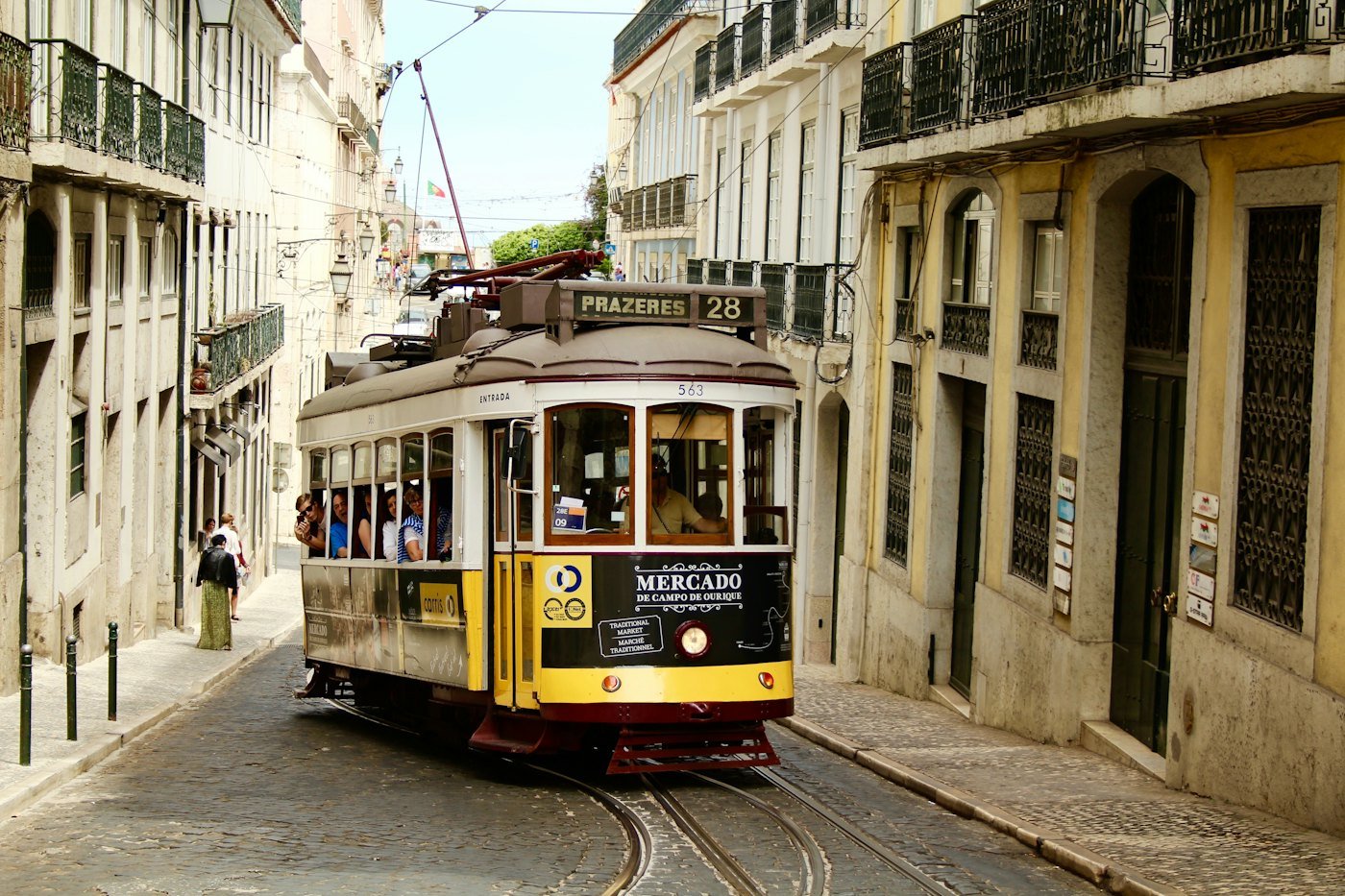
4. Ride Tram 28
Tram 28 is the famous yellow tram that rattles through Graça, Alfama, Baixa and Chiado. It’s a fun way to see the hills, but it’s often packed and a known spot for pickpockets. Ride early in the morning, board at the Martim Moniz end for a better chance of a seat, and keep your bag in front of you.
5. Browse the Feira da Ladra flea market
The Feira da Ladra is Lisbon’s long-running flea market at Campo de Santa Clara, between Alfama and Graça. It runs on Tuesdays and Saturdays and is good for tiles, old postcards and secondhand odds and ends.
The miradouros: Lisbon’s viewpoints
Lisbon’s miradouros are open-air viewpoints, and visiting a few is one of the best free things to do in the city.
6. Watch the city from the miradouros
The best known are:
- Santa Luzia and Portas do Sol in Alfama, for views over rooftops to the river.
- Miradouro da Graça, with a café terrace looking toward the castle.
- Miradouro da Senhora do Monte, the highest of the group, a classic sunset spot.
- São Pedro de Alcântara, between Bairro Alto and Príncipe Real, facing the castle across the valley.
- Santa Catarina, west of Chiado, looking toward the river and the 25 de Abril Bridge.
Go in the late afternoon and bring a layer, since it can get windy.
Baixa, Chiado and the riverfront
Baixa and Chiado are Lisbon’s flat center and its elegant shopping district, and most visitors pass through them daily.
7. Walk from Rossio to Praça do Comércio
Walk down the pedestrian Rua Augusta from Rossio square, through the Rua Augusta Arch, to Praça do Comércio, the huge riverside square that once held the royal palace. It’s the easiest way to understand how the city was rebuilt after the 1755 earthquake.
8. Ride the Santa Justa lift
The Elevador de Santa Justa is a wrought-iron lift connecting Baixa with the Carmo area above. The queue at the bottom can be long. If you mainly want the view, you can walk up to Carmo and see the city from the top end instead.
9. Visit the Carmo Convent ruins
The Convento do Carmo lost its roof in the 1755 earthquake and was never rebuilt. The open Gothic arches against the sky are striking, and the site holds a small archaeological museum.
10. Eat at the Time Out Market
The Time Out Market in Cais do Sodré, inside the old Mercado da Ribeira, gathers stalls from well-known Lisbon chefs and food businesses under one roof. It’s busy at lunch and dinner, so go off-peak for a seat.
Belém and the west
Belém holds Lisbon’s biggest monuments and deserves at least half a day.
11. Tour the Jerónimos Monastery
The Mosteiro dos Jerónimos is a UNESCO World Heritage site and the high point of Manueline architecture, with a richly carved cloister. Queues are long, so book ahead on the official site and arrive early.
12. See Belém Tower and the Monument to the Discoveries
Belém Tower, a small fortress on the riverbank, is also UNESCO-listed. Nearby, the Padrão dos Descobrimentos celebrates Portugal’s Age of Discovery. Both are a short riverside walk from the monastery.
13. Try a pastel de nata at the source
Pastéis de Belém, next to the monastery, has been baking custard tarts since 1837. The takeaway line moves faster than the table line, and the tarts are best warm with cinnamon and powdered sugar.
14. Spend an afternoon at LX Factory
LX Factory is a converted industrial complex in Alcântara, under the 25 de Abril Bridge, now filled with shops, restaurants and studios. Don’t miss the Ler Devagar bookshop inside. It’s on the way to or from Belém by tram 15 or train.
Museums, markets and evenings
Lisbon’s best museums are spread around the city, and its evenings are built around fado and food.
15. Hear fado
Fado is Portugal’s melancholy song tradition, recognized by UNESCO as intangible cultural heritage. Alfama, Mouraria and Bairro Alto have many small fado houses, most of which serve dinner with the music. Book ahead for popular venues and stay quiet during songs, as it’s expected.
16. Visit the National Tile Museum
The Museu Nacional do Azulejo, in a former convent east of Alfama, traces five centuries of Portuguese tiles. Its long tiled panorama of pre-earthquake Lisbon is a highlight. It’s a short taxi or bus ride from the center.
17. See the Gulbenkian Museum
The Calouste Gulbenkian Museum holds a wide-ranging private art collection, from ancient Egypt to Lalique jewelry, set in gardens that are a calm break from the city. It’s next to the São Sebastião metro station.
18. Visit the Oceanário in Parque das Nações
The Oceanário de Lisboa is one of Europe’s largest aquariums, built for Expo ’98 in the modern Parque das Nações district. It’s a good choice with kids or on a rainy day, and easy to reach by metro on the red line.
Day trips from Lisbon
Sintra is the best day trip from Lisbon, with Cascais a close second for a beach day.
| Day trip | Travel time | How | Best for |
|---|---|---|---|
| Sintra | About 40 minutes | Train from Rossio | Palaces, gardens, forest |
| Cascais | About 40 minutes | Train from Cais do Sodré | Beaches, seaside town |
| Cacilhas | About 10 minutes | Ferry from Cais do Sodré | River views of Lisbon |
Sintra
Sintra is a UNESCO-listed town in wooded hills, known for the colorful Pena Palace, the Moorish Castle and the gardens and initiation well of Quinta da Regaleira. Go early, book palace tickets ahead, and wear good shoes, since the sights are spread over steep roads. Read more on our Sintra destination page.
Cascais
Cascais is a former fishing town on the coast west of Lisbon, with small beaches and a walkable center. The train hugs the river and coast most of the way.
Who Lisbon suits, and who might struggle
Lisbon suits
- Travelers who like walking and exploring neighborhoods rather than ticking off big museums.
- Food lovers and anyone happy with long, relaxed meals.
- Photographers, thanks to the light, hills and tiles.
You may struggle if
- You have limited mobility. The hills and cobblestones are tough, so plan around trams, lifts and taxis.
- You want quiet nights in the center. Some central areas are loud on weekends.
How to plan your Lisbon days
Group sights by area to avoid backtracking up and down the hills.
- Day 1: Alfama, the Sé, São Jorge Castle and the viewpoints, then fado in the evening.
- Day 2: Belém in the morning, LX Factory in the afternoon, Time Out Market for dinner.
- Day 3: Baixa, Chiado, the Carmo ruins, the Tile Museum or Gulbenkian, and sunset at a miradouro.
- Day 4: Sintra.
To fit Lisbon into a bigger trip, see our Portugal itinerary, which pairs it with Porto and the Douro Valley. If you’re heading north afterward, our guide to where to stay in Porto will help. For more ideas, browse the Lisbon destination page and the Portugal hub. Visiting Spain on the same trip? Compare Lisbon with our list of the best things to do in Barcelona.
FAQ
What is Lisbon best known for?
Lisbon is known for its hills and viewpoints, yellow trams, tiled buildings, fado music and pastéis de nata. Belém’s monuments and the old Alfama district are its most famous sights.
How many days do you need in Lisbon?
Three days is enough for the main sights. Four lets you add a Sintra day trip without rushing.
Is Tram 28 worth it?
It’s worth riding once, early in the morning, for the route through the old neighborhoods. At busy times it’s crowded and a target for pickpockets, so walking part of the route is often more pleasant.
What are the best free things to do in Lisbon?
Walking Alfama, visiting the miradouros, strolling Praça do Comércio and the riverfront, and browsing the Feira da Ladra cost nothing.
Do you need to book tickets ahead in Lisbon?
For Jerónimos Monastery, São Jorge Castle and the Sintra palaces in high season, yes. Check the official sites for current hours and booking rules.