The best area for first-timers in Porto is Baixa, around Avenida dos Aliados: it’s central, close to São Bento station and the metro, and a downhill walk to the river. If you want the classic postcard view, Ribeira puts you right on the Douro waterfront, while Vila Nova de Gaia across the river is the place for port cellars and skyline views. This guide to where to stay in Porto compares six areas so you can pick the right base.
Quick answer
- First trip: Baixa/Aliados, which is central, well connected and less steep than the riverfront.
- Waterfront atmosphere: Ribeira, the riverside heart of the historic center, though it’s busy and hilly.
- Art, cafés and a local feel: Cedofeita and the Rua Miguel Bombarda area.
- Port wine and views of Porto: Vila Nova de Gaia, just across the Dom Luís I Bridge.
- Ocean and slower pace: Foz do Douro, where the river meets the Atlantic.
Where should first-timers stay in Porto?
Stay in Baixa, near Avenida dos Aliados or São Bento station, because it puts the whole historic center within walking distance.
Porto is compact, but it’s built on steep slopes running down to the Douro River. Baixa sits on the higher, flatter ground at the top. From here you can walk to the Clérigos Tower, Livraria Lello, the Bolhão market and Rua de Santa Catarina in a few minutes, and walk down to Ribeira in about 10 to 15 minutes.
São Bento station, famous for its blue-and-white tile panels, is in Baixa and handles many regional trains, including services up the Douro Valley. The Aliados and Trindade metro stations are close by, and the metro runs directly to the airport.
Porto neighborhoods compared
The main choice in Porto is between convenience on the hilltop, atmosphere by the river, and space or views further out.
| Area | Best for | Vibe | Downsides |
|---|---|---|---|
| Baixa/Aliados | First-timers, short stays | Grand avenues, cafés, central | Can feel busy and commercial |
| Ribeira | Views, atmosphere | Colorful riverside houses, terraces | Crowded, steep, often noisy |
| Cedofeita/Bombarda | Repeat visitors, art lovers | Galleries, independent shops | Fewer big sights on the doorstep |
| Vila Nova de Gaia | Port cellars, skyline views | Riverside promenade, wine lodges | Uphill walk or bridge crossing to Porto’s center |
| Foz do Douro | Beaches, longer stays | Seaside, residential, relaxed | About 20 to 30 minutes from the center |
| Bolhão | Food, shopping, metro access | Market streets, local shops | Some streets feel less polished |
The best areas to stay in Porto in detail
Baixa and Aliados: the best all-round base
Baixa is Porto’s downtown, centered on Avenida dos Aliados, a broad avenue that ends at the City Hall. It’s lined with grand early 20th-century buildings, banks and hotels.
The appeal is simple: you’re close to almost everything, and the ground is gentler than near the river. The main drawback is that some streets feel more commercial than charming, and it’s busy by day.
A long-established option here is the InterContinental Porto, set in the restored Palácio das Cardosas at the bottom of Avenida dos Aliados.
Ribeira: the riverside postcard
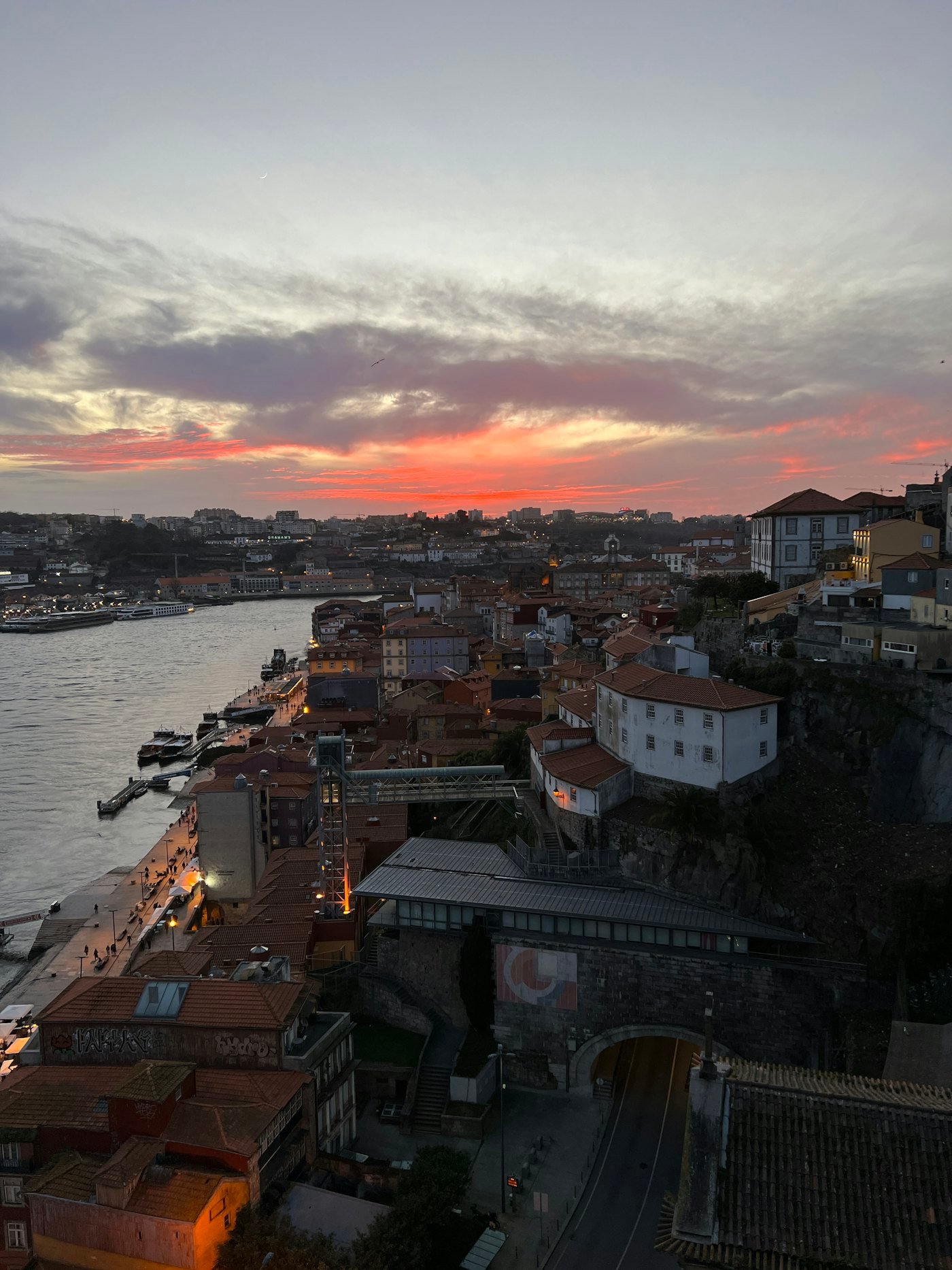
Ribeira is the riverside part of Porto’s UNESCO-listed historic center. Its stacked, colorful houses face the Douro and the double-decker Dom Luís I Bridge, and the quay is lined with restaurant terraces.
Waking up here is memorable, but be realistic about the downsides. It’s one of the busiest parts of the city, the terraces can be noisy into the evening, and every walk back up to Baixa is steep. Some older buildings don’t have elevators. It suits couples on a short trip who value the view over convenience.
Cedofeita and Bombarda: for art and a local feel
Cedofeita lies west of Baixa, around the pedestrian Rua de Cedofeita and the gallery street of Rua Miguel Bombarda. It has independent shops, small cafés and a more residential feel.
It’s a good choice if you’ve seen the main sights before or want to feel less like a tourist. You’re still within walking distance of the center, roughly 10 to 20 minutes depending on where you stay.
Vila Nova de Gaia: port cellars and the view of Porto
Vila Nova de Gaia is technically a separate city on the south bank of the Douro, directly across from Ribeira. Its riverside is lined with the historic port wine lodges, most of which offer tours and tastings.
The big advantage is the view: from Gaia you look across at Porto’s stacked old town, and the Jardim do Morro and the Serra do Pilar monastery terrace above it are classic sunset spots. You can walk across the lower deck of the Dom Luís I Bridge to Ribeira, or the upper deck, which also carries the metro, to Baixa. A cable car runs along the Gaia riverfront.
The Yeatman, a well-known wine-themed luxury hotel on the Gaia hillside, is the best-known high-end stay here. The main downside of Gaia is that evenings in Porto mean crossing the bridge and climbing.
Foz do Douro: the seaside option
Foz do Douro is where the Douro meets the Atlantic, on Porto’s western edge. It has a long seafront promenade, beaches, and a calm, residential feel.
It’s a good base for longer stays, summer trips or travelers who want sea air in the evening. Getting to the center takes about 20 to 30 minutes by bus, and the historic Tram 1 runs along the river between Foz and the edge of Ribeira. For a short first visit, it’s too far out.
Bolhão: market streets and metro access
Bolhão sits on the east side of Baixa, around the Mercado do Bolhão, a historic market that reopened after a major renovation. Nearby Rua de Santa Catarina is a pedestrian shopping street with the Majestic Café and the tiled Capela das Almas.
It’s central and has its own metro station, which is handy for the airport and for Campanhã station, where most trains to and from Lisbon arrive. Some streets are less polished than Aliados, but it’s practical and good value for the location.
Who each area suits, and who should skip it
Good fits
- Baixa/Aliados and Bolhão: first-timers, short city breaks and anyone using the metro or trains.
- Ribeira: couples who want the river view right outside the window.
- Cedofeita: repeat visitors, art fans and longer stays.
- Vila Nova de Gaia: port wine fans and photographers.
- Foz do Douro: summer visitors, families who want beach time and slow travelers.
Who should skip
- Light sleepers: skip the busiest stretch of the Ribeira quay.
- Travelers with heavy luggage or limited mobility: skip Ribeira and the lower Gaia riverside, or confirm an elevator and taxi access first.
- Trips of two nights or less: skip Foz do Douro.
Getting around and practical tips
Porto is walkable, but plan your base around the hills and the metro.
- From the airport: the metro’s violet line (Line E) runs from the airport to the center in roughly 30 minutes.
- Trains from Lisbon: most arrive at Campanhã, east of the center. From there, a short local train runs to São Bento, and the metro reaches Baixa.
- Douro Valley trips: regional trains up the valley leave from São Bento and Campanhã, so a Baixa base is convenient.
- Check the slope: look at the street before booking. The climb from Ribeira to Baixa is short but steep.
- Book early for June: the São João festival on the night of June 23 fills the city.
If you’re splitting a trip between two cities, our Portugal itinerary covers how many nights to give Porto and how to add the Douro Valley. Coming from the capital? See where to stay in Lisbon and our list of the best things to do in Lisbon to plan the first half of your trip.
For sights, food and day trips in the north, start with the Porto destination page and the wider Portugal guide. Many travelers stop in Coimbra, which is on the main train line between Lisbon and Porto.
If Porto is part of a longer trip around Europe, our guides on where to stay in Barcelona and where to stay in Paris follow the same format.
FAQ
What is the best area to stay in Porto for first-time visitors?
Baixa, around Avenida dos Aliados and São Bento station. It’s central, well connected by metro and train, and a short walk from Ribeira.
Is it better to stay in Porto or Vila Nova de Gaia?
Stay in Porto for convenience and Gaia for views and port cellars. Gaia is right across the river, but getting back up to Porto’s center involves a bridge crossing and a climb.
Is Ribeira a good place to stay?
It’s great for atmosphere and views, but it’s crowded, steep and can be noisy. It suits short stays better than long ones.
How many days do you need in Porto?
Two full days cover the historic center and Gaia. Add a third day for a Douro Valley trip or time in Foz do Douro.
Is Porto very hilly?
Yes. The historic center climbs steeply from the river, so pick a base with your mobility and luggage in mind.