The best Italy itinerary for a first trip is Rome, Florence and Venice in that order, linked by fast trains: 7 days covers all three, 10 days lets you add the Amalfi Coast or Cinque Terre, and 14 days adds Milan and Lake Como as well. This guide gives day-by-day routes for each length, how long each train takes, and where to base yourself. Fly into Rome and out of Venice or Milan if you can, so you never have to backtrack.
Quick answer
- 7 days: Rome (3 nights), Florence (2), Venice (2).
- 10 days: Rome (3), Amalfi Coast (3), Florence (2), Venice (2). Swap the coast for Cinque Terre if you would rather head north.
- 14 days: Rome (4), Amalfi Coast (3), Florence (3), Venice (2), Milan or Lake Como (2).
- Getting around: high-speed trains between the big cities. Rome to Florence takes about 1.5 hours, and Florence to Venice about 2 hours.
- Best time: April to June or September to October.
How many days do you need in Italy?
Seven days is the minimum for Rome, Florence and Venice, and 10 to 14 days lets you add the coast or the lakes without rushing.
The common mistake is trying to see too much. Every move between cities costs half a day once you count checking out, getting to the station, the train itself and finding your next hotel. As a rule of thumb, give each base at least two nights and Rome at least three.
Book your city stays early, because the best-located rooms go first in spring and autumn. Our neighborhood guides for where to stay in Rome, where to stay in Florence, where to stay in Venice and where to stay in Milan explain which areas work best for each stop.
7-day Italy itinerary: Rome, Florence and Venice
This is the classic first trip: three cities, two train rides and no car.
| Day | Base | Highlights |
|---|---|---|
| 1 | Rome | Arrive, walk the Centro Storico: Pantheon, Piazza Navona, Trevi Fountain |
| 2 | Rome | Colosseum, Roman Forum and Palatine Hill; evening in Monti or Trastevere |
| 3 | Rome | Vatican Museums, Sistine Chapel and St Peter’s Basilica |
| 4 | Florence | Morning train (about 1.5 hours); Duomo, Piazza della Signoria, Ponte Vecchio |
| 5 | Florence | Uffizi or Accademia; Oltrarno and sunset at Piazzale Michelangelo |
| 6 | Venice | Train to Venezia Santa Lucia (about 2 hours); Grand Canal by vaporetto, evening walk |
| 7 | Venice | St Mark’s Basilica, Doge’s Palace, Rialto; fly home from Marco Polo the next day |
Rome (days 1 to 3)
Three days covers the ancient city, the Vatican and the historic center at a steady pace. Book timed tickets for the Colosseum and the Vatican Museums before you travel, because slots sell out in high season. Stay in the Centro Storico or Monti so you can walk most places.
Florence (days 4 and 5)
Two days is enough for the Duomo, one major museum and an afternoon across the river in the Oltrarno. Book the Duomo climb, the Uffizi and the Accademia ahead. If you only have time for one museum, pick the Uffizi for paintings or the Accademia for Michelangelo’s David.
Venice (days 6 and 7)
Sleep in the historic center, not on the mainland, so you see Venice in the quiet early morning and evening. Ride vaporetto Line 1 down the Grand Canal on your first afternoon. On day 7, get to St Mark’s early, then wander away from the main routes and let yourself get lost.
10-day Italy itinerary: add the coast
With 10 days, keep the three cities and add either the Amalfi Coast in the south or Cinque Terre on the north-west coast.
Option A: Amalfi Coast
| Day | Base | Highlights |
|---|---|---|
| 1-3 | Rome | As in the 7-day plan |
| 4 | Amalfi Coast | Train to Naples or Salerno, then ferry or bus to Positano or Amalfi |
| 5 | Amalfi Coast | Boat trip along the coast or a day in Amalfi and Ravello |
| 6 | Amalfi Coast | Path of the Gods hike, or Pompeii as a day trip |
| 7 | Florence | Long travel day north by fast train |
| 8 | Florence | Duomo, Uffizi, Oltrarno |
| 9-10 | Venice | As in the 7-day plan |
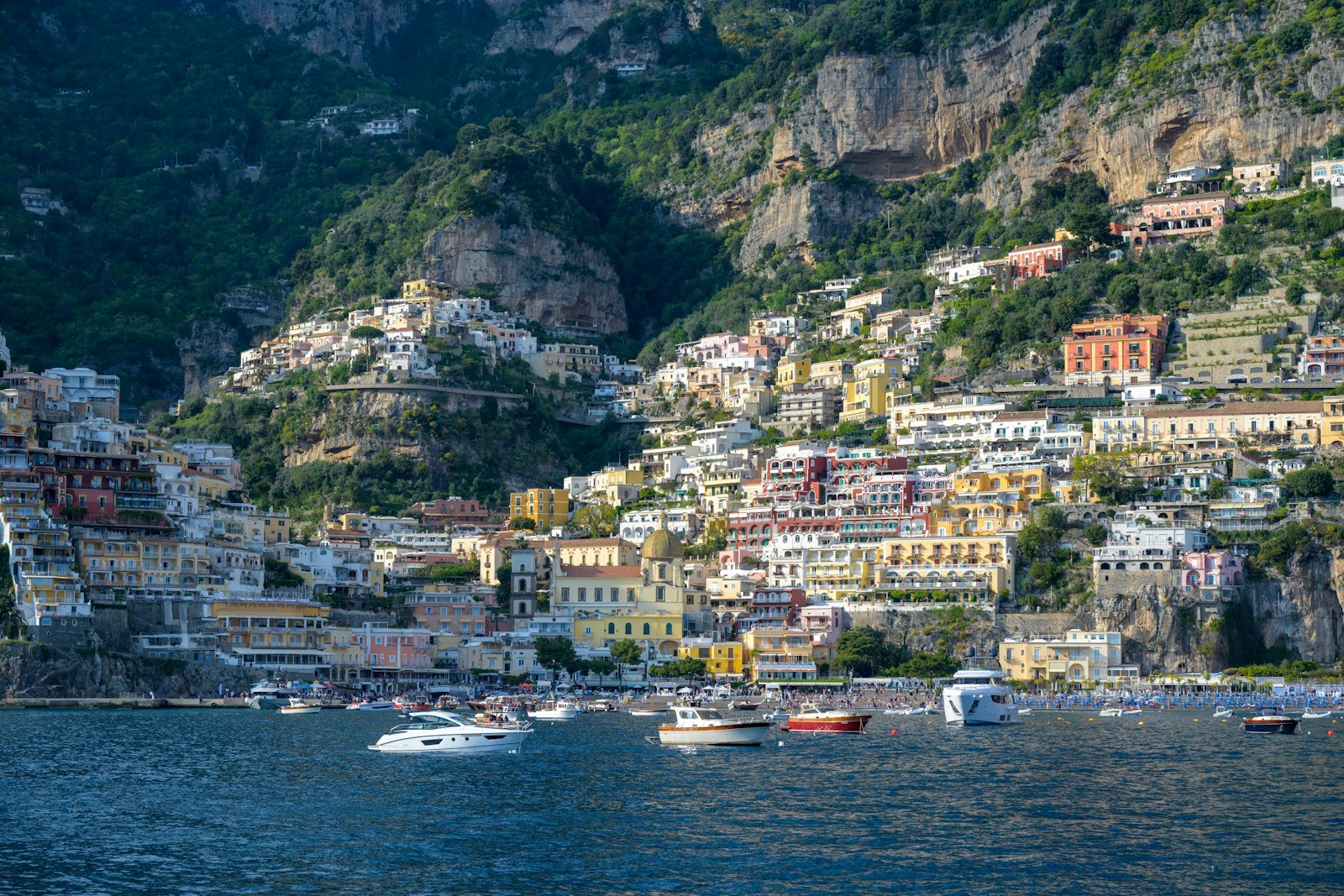
High-speed trains from Rome reach Naples in a little over an hour. From Naples or Salerno, ferries run to Positano and Amalfi, mostly from spring to autumn, and buses run along the coast road all year. Check ferry schedules before you go, because they change by season and can be cancelled in rough seas.
This route is a little more tiring than the 7-day plan because day 7 is a long trip from the coast to Florence. It is worth it if you want sea views and swimming. Our Amalfi Coast guide and Naples guide cover the area in more detail.
Option B: Cinque Terre
Cinque Terre is easier to fit into the route because it sits between Florence and the north. Spend three nights in Rome, then three in Florence with a full day (or one night) in Cinque Terre, and finish with two nights in Venice. Trains from Florence to La Spezia take about two and a half hours, usually with a change at Pisa. From La Spezia, a local train links the five villages: Riomaggiore, Manarola, Corniglia, Vernazza and Monterosso.
A day trip is long. If you want to hike the coastal paths or see the villages in the evening, stay a night in one of them or in La Spezia, and book early for summer. Some coastal paths close after storms or for repairs, so check which ones are open before you go.
14-day Italy itinerary: cities, coast and lakes
Two weeks lets you see the big three cities properly, add the Amalfi Coast and finish in Milan or on Lake Como.
| Day | Base | Highlights |
|---|---|---|
| 1-4 | Rome | Ancient Rome, Vatican, Centro Storico, Trastevere, Testaccio |
| 5-7 | Amalfi Coast | Positano, Amalfi, Ravello, boat trip; Pompeii on the way in or out |
| 8-10 | Florence | Museums, Oltrarno; day trip to Siena, Pisa, Lucca or Cinque Terre |
| 11-12 | Venice | San Marco, Dorsoduro, Cannaregio; Murano and Burano by vaporetto |
| 13-14 | Milan or Lake Como | Duomo and the Last Supper in Milan, or a lakeside town such as Varenna |
The extra day in Rome gives you time for neighborhoods beyond the main sights. Three nights in Florence means one full day can go on a Tuscan day trip. Siena is easiest by bus, while Pisa and Lucca are easy by regional train.
Fast trains run from Venice to Milan in roughly two to two and a half hours. From Milano Centrale, regional trains reach Varenna on Lake Como in about an hour. Fly home from Milan Malpensa or Linate. If Lake Como is the priority, sleep by the lake and treat Milan as a stop on the way to the airport.
If you would rather slow down, drop the Amalfi Coast and give those three days to Bologna, which sits between Florence and Venice on the high-speed line and is known for its food.
How do you get between cities in Italy?
Take the train. High-speed services link the main cities center to center, and they are usually faster than flying once you count airport time.
| Route | Approximate time by fast train | Arrives at |
|---|---|---|
| Rome to Florence | About 1.5 hours | Firenze Santa Maria Novella |
| Rome to Naples | About 1 hour 10 minutes | Napoli Centrale |
| Naples to Florence | About 3 hours | Firenze Santa Maria Novella |
| Florence to Venice | About 2 hours | Venezia Santa Lucia |
| Florence to Milan | About 2 hours | Milano Centrale |
| Venice to Milan | About 2 to 2.5 hours | Milano Centrale |
Train tips
- Two operators run high-speed trains. Trenitalia (Frecciarossa) and Italo both serve the main routes. Compare both, and book early for the best fares.
- Regional trains are different. They have fixed fares and no seat reservations. If you have a paper regional ticket, validate it in the machines on the platform before boarding.
- Use the right Venice station. Venezia Santa Lucia is in the historic city. Venezia Mestre is on the mainland.
- Skip the car in the cities. Historic centers have limited traffic zones (ZTL) with camera fines. Rent a car only for countryside days in Tuscany or similar areas.
Who this itinerary suits, and who should change it
These routes are built for first-time visitors who want the famous sights without a car.
This plan suits you if you:
- Are visiting Italy for the first time.
- Prefer trains to driving.
- Want a mix of art, history, food and one coastal or lake break.
Change it if you:
- Have been to Rome, Florence and Venice before. Try Bologna, Puglia, Sicily or the Dolomites instead.
- Want slow travel. Cut a city and spend more time in Tuscany or on the coast.
- Are traveling in July or August. Plan early starts, midday breaks and more beach or lake time.
When is the best time to visit Italy?
Spring (April to June) and early autumn (September to October) offer the best balance of weather and crowds.
July and August are hot and very busy, especially in Rome, Florence and on the coast. Around the Ferragosto holiday on 15 August, some locally run shops and restaurants in the cities close for a break. Winter is quieter and cheaper in the cities, but many Amalfi Coast hotels close and ferries are limited. Venice can flood in autumn and winter during acqua alta.
Planning more than one country this year? Our Portugal itinerary and 2 days in Paris guide use the same day-by-day format.
Italy itinerary FAQ
Is 7 days enough for Italy?
Seven days is enough for Rome, Florence and Venice if you keep to three bases and travel by train. It is not enough to add the coast or the lakes without rushing.
What is the best order for Rome, Florence and Venice?
Rome, then Florence, then Venice, or the reverse. Florence sits between the other two on the high-speed line, so either direction avoids backtracking.
Should I fly or take the train between Italian cities?
Take the train between Rome, Florence, Venice, Milan and Naples. It goes from city center to city center and is usually quicker overall than flying.
Can you do the Amalfi Coast and Cinque Terre in one trip?
You can in 14 days, but they are far apart and both involve slow local transport. On a 10-day trip, pick one: the Amalfi Coast if you start in Rome, Cinque Terre if you want an easy addition to Florence.
Do I need to book Italian trains in advance?
High-speed trains can be bought on the day, but booking ahead usually gets cheaper fares and guarantees a seat in busy periods. Regional trains have fixed fares, so there is no advantage to booking early.
Where should I fly into for an Italy itinerary?
Fly into Rome Fiumicino and out of Venice Marco Polo or Milan, or the reverse. An open-jaw ticket saves you a day of traveling back to your starting point.
Guides to plan each stop
Once your route is set, use these guides to choose the right neighborhood in each city:
- Where to stay in Rome: neighborhoods compared
- Where to stay in Florence for every kind of trip
- Where to stay in Venice: the best sestieri
- Where to stay in Milan, from the Duomo to the Navigli
For more ideas, browse our Italy travel guides and all our itineraries.