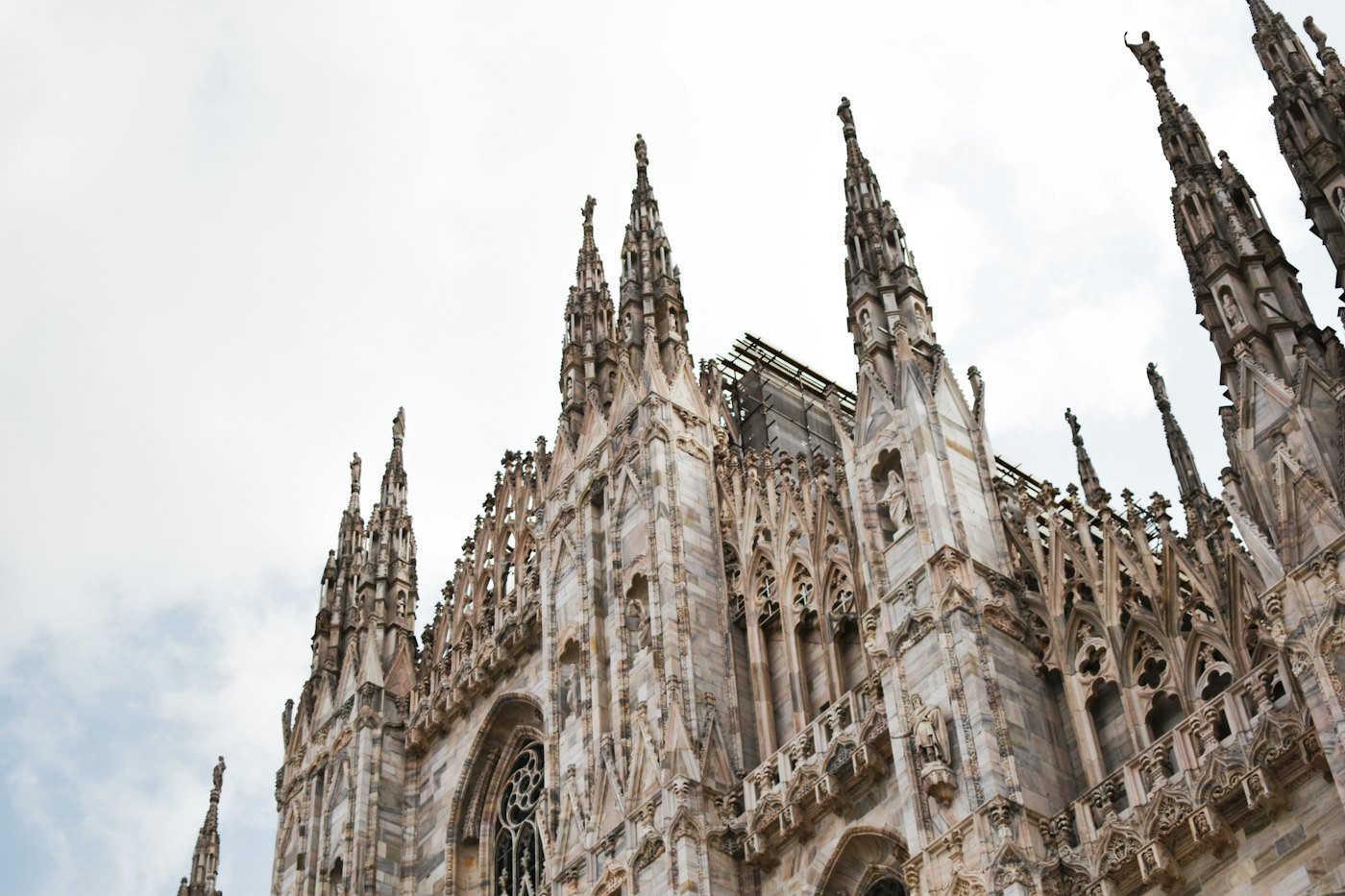
The best area to stay in Milan for first-timers is around the Duomo, because the cathedral, the Galleria Vittorio Emanuele II and La Scala are all on your doorstep and two metro lines meet there. Brera is the best choice for a more characterful stay, and the Navigli is the place for evenings out by the canals. Milan is spread out and has an excellent metro, so a base near a station matters more here than in Florence or Venice.
Quick answer
- First visit or a short stay: Duomo and the historic center.
- Charm, galleries and good restaurants: Brera.
- Nightlife and aperitivo by the water: Navigli.
- Early trains, airport buses and day trips: Centrale or Porta Garibaldi.
- Modern Milan and a local neighborhood feel: Porta Nuova and Isola.
How Milan is laid out
Milan spreads out in rings from the Duomo, and the metro is the quickest way to cover it.
The historic center sits inside the old canal ring, with Brera just to the north and the fashion streets of the Quadrilatero d’Oro to the north-east. The main railway station, Milano Centrale, is further north-east. Porta Garibaldi station and the skyscrapers of Porta Nuova are to the north, and the Navigli canals and the Tortona design district are to the south-west.
The metro has five lines. M1 (red) and M3 (yellow) both stop at Duomo. M2 (green) links Centrale, Garibaldi and Porta Genova for the Navigli. M4 (blue) connects Linate airport with the center. Being within a few minutes’ walk of a metro stop is the single most useful thing to check when you book.
Milan often sits at the start or end of a longer Italy trip, especially if you fly in or out of Malpensa. Our Italy itinerary shows how to combine it with Venice, Florence and Lake Como.
Where should first-timers stay in Milan?
Stay near the Duomo if this is your first visit and you have one to three nights.
Duomo and the historic center
From here you can walk to the cathedral and its rooftop terraces, the Galleria, La Scala, the Sforza Castle and the shopping streets around Via Montenapoleone. Two metro lines at Duomo station make every other area easy to reach.
The downside is that the center is expensive and quieter in the evening than you might expect, with many shops and offices closing at night. Dinner options right by the cathedral are often tourist-focused, so walk a few streets away to eat.
Two well-known luxury hotels are here: the Park Hyatt Milano, right beside the Galleria, and the Armani Hotel Milano on Via Manzoni at the edge of the fashion district.
One planning point: Leonardo’s Last Supper is in the refectory of Santa Maria delle Grazie, west of the center. Entry is by timed ticket, and slots sell out well ahead, so book as soon as your dates are fixed through the official channel.
Is Brera a good area to stay in Milan?
Yes. Brera is the most atmospheric central neighborhood and a strong choice for couples and repeat visitors.
Its cobbled streets are lined with galleries, small boutiques, cafés and restaurants, and it is home to the Pinacoteca di Brera, one of Italy’s major art collections. The Duomo is about a 15 minute walk away. The Lanza and Montenapoleone metro stops are close, and Moscova is a short walk away.
Brera is busy in the evening, especially on weekends, and prices reflect its popularity. The Bulgari Hotel Milano is on a quiet private street on the edge of the neighborhood, next to the Brera botanical garden.
Where to stay in Milan for nightlife
The Navigli is the best area for nightlife, aperitivo and a younger crowd.
Navigli
The Naviglio Grande and Naviglio Pavese canals meet at the Darsena, the old city harbor, and the canal-side streets fill up with people at aperitivo time. During the day it is relaxed, with vintage shops, bookshops and artists’ studios. Porta Genova (M2) is the main metro stop, and the Darsena area is also served by Sant’Agostino (M2).
The obvious downside is noise. Bars stay busy late, especially from Thursday to Saturday. Look for a room on a side street or a higher floor, and check reviews for mentions of noise.
Tortona
Tortona, just west of Porta Genova, is a former industrial area turned design district. It is the center of Milan Design Week events each April and is home to MUDEC, the Museum of Cultures. It is quieter than the canals at night and convenient for both the Navigli and the metro.
Best areas near Milan’s train stations
Centrale and Porta Garibaldi are the most practical bases for early trains, airport transfers and day trips.
Centrale
Milano Centrale is the city’s main station, with high-speed trains to Venice, Florence and Rome, and regional trains to Lake Como. Buses to Malpensa and Bergamo airports leave from beside the station, and the Malpensa Express train also stops here. The M2 and M3 metro lines take you into the center in minutes.
The area is functional rather than charming. It is full of business hotels, and the streets immediately around the station can feel rough late at night. It is a sensible choice for one night before an early departure, less so for a longer stay.
Porta Nuova and Garibaldi
This is modern Milan: the glass towers around Piazza Gae Aulenti, the Bosco Verticale apartment towers covered in trees, and the Biblioteca degli Alberi park. Porta Garibaldi station has suburban and regional trains, plus the M2 and M5 metro lines. Corso Como, with its bars and restaurants, runs south from the station.
It is well connected and pleasant to walk around. Its new buildings make it feel less Italian than Brera, which sits just to the south.
Best neighborhoods for a local feel
Isola and Porta Romana are the best options if you would rather live like a resident than stay among the sights.
Isola
Isola sits just north of Porta Garibaldi, across the railway tracks from Porta Nuova. It used to be a working-class district and still has independent cafés, small restaurants, street art and a neighborhood feel. The Isola stop on the M5 line and Garibaldi station are close. It suits travelers who have seen the main sights or want more space for their budget.
Porta Romana
Porta Romana is a residential area south-east of the center, built around Corso di Porta Romana. It has good local restaurants and food shops, and the M3 line runs straight to the Duomo in a few stops. The Fondazione Prada art center is a short ride further south. It is quiet in the evenings, which is a plus for families and a minus if you want nightlife on your doorstep.
Milan neighborhoods compared
| Area | Best for | Vibe | Downsides |
|---|---|---|---|
| Duomo | First visit, short stays | Grand, central, shopping | Expensive, quiet at night |
| Brera | Couples, art, dining | Cobbled, artsy, smart | Busy, high prices |
| Navigli | Nightlife, aperitivo | Canal-side, young | Noise late at night |
| Tortona | Design, creative travelers | Industrial-chic | Few classic sights nearby |
| Centrale | Trains, airport buses | Business, functional | Unattractive, rough at night |
| Porta Nuova / Garibaldi | Transport links, modern stays | Contemporary, polished | Less historic character |
| Isola | Local feel, value | Independent, creative | Few big sights |
| Porta Romana | Families, quiet stays | Residential | Limited nightlife |
Who should stay central, and who can save by staying further out?
Because the metro is fast, staying outside the very center costs you little time.
Stay near the Duomo or in Brera if you:
- Have one or two nights and want to walk to the main sights.
- Are in Milan mainly for shopping and the cathedral.
- Prefer not to use public transport at night.
Stay in Isola, Porta Romana or near a station if you:
- Are on a budget or need a larger room.
- Plan day trips to Lake Como, Bergamo or Turin.
- Are visiting during a trade fair or fashion week, when central prices jump.
Practical tips for booking a hotel in Milan
Check the event calendar before you pick your dates.
- Watch for big events. Milan Design Week in April and the fashion weeks fill hotels and raise prices across the city.
- Know your airport. Linate is closest and is on the M4 metro. Malpensa is much further out, so a hotel near Centrale or Cadorna, where the Malpensa Express stops, saves time.
- Plan your Lake Como day. Trains to Como and Varenna take roughly an hour, so a base near Centrale, Garibaldi or Cadorna makes the day easier.
- Expect a city tourist tax. It is charged per person per night and usually paid at the hotel.
Milan connects easily with the rest of the country. Fast trains reach Venice in roughly two to two and a half hours, Florence in about two hours and Rome in around three hours. See our guides to where to stay in Venice, where to stay in Florence and where to stay in Rome for the next leg. If your trip continues to France, our Paris arrondissement guide covers where to stay there.
Where to stay in Milan: FAQ
What is the best area to stay in Milan for tourists?
The area around the Duomo is the best for first-time visitors, with Brera a close second. Both are within walking distance of the main sights and close to the metro.
Is it safe to stay near Milano Centrale?
Staying near Centrale is generally fine and very convenient for trains and airport buses. The streets right around the station can feel uncomfortable late at night, so choose a hotel on a main road and stay alert.
How many days do you need in Milan?
One full day covers the Duomo, the Galleria and the Last Supper if you have a ticket. Two or three days lets you add Brera, the Navigli and a day trip to Lake Como.
Is Navigli a good area to stay in Milan?
Navigli is a good area if you want nightlife and a relaxed, canal-side atmosphere. Light sleepers should choose a room away from the main canal streets.
Should I stay in Milan or Lake Como?
Stay in Milan if you want city sights and easy train connections, and visit the lake as a day trip. If the lake is the main reason for your trip, spend at least a night or two in a lakeside town such as Varenna or Bellagio.
Plan your next stop in Italy
Milan pairs well with Venice and Florence by train, and many routes finish in Rome. These guides cover the rest of the trip: