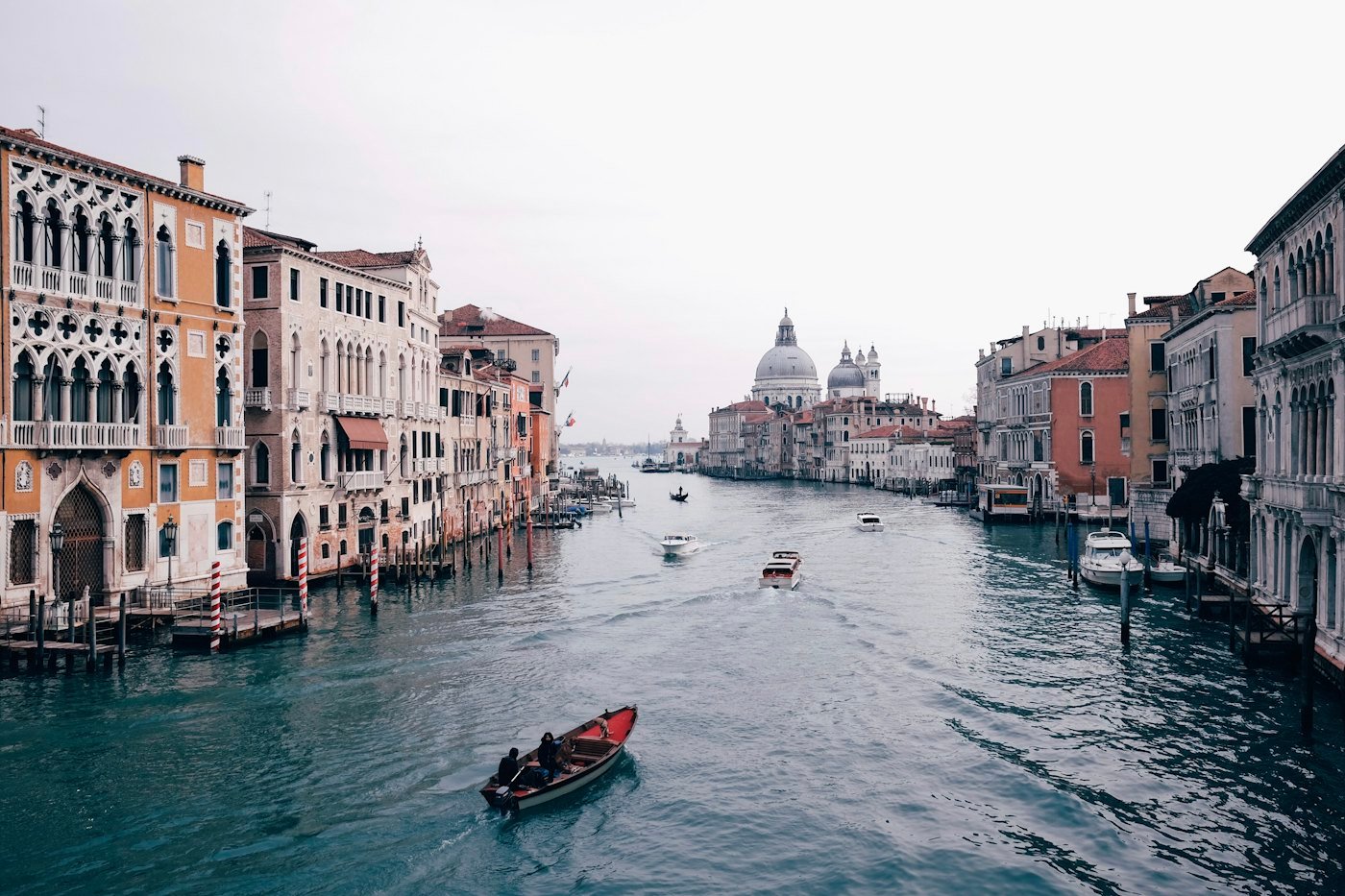
The best area to stay in Venice for first-timers is San Marco or the edge of Castello right next to it, because almost everything you came to see is a short walk away. If you want a calmer, more local base with good restaurants, pick Cannaregio or Dorsoduro instead. Mestre on the mainland is the budget option, but it means a train or tram ride into the city every day.
Quick answer
- First visit, short stay: San Marco, or western Castello near the Riva degli Schiavoni.
- Local feel and canal-side evenings: Cannaregio.
- Art, quieter streets and sunset walks: Dorsoduro.
- Central and easy from the station: San Polo and Santa Croce.
- Tight budget or traveling by car: Mestre, about 10 minutes by train from Venezia Santa Lucia.
How Venice is laid out
Historic Venice is split into six districts called sestieri, and none of them is far from the others.
San Marco, Castello and Cannaregio sit on the north side of the Grand Canal. San Polo, Santa Croce and Dorsoduro sit on the south side. Giudecca is a separate island across a wide channel from Dorsoduro, and the Lido is a long barrier island between the lagoon and the Adriatic. Mestre is part of the city but sits on the mainland.
You can cross the whole historic center on foot in about an hour, but the streets are narrow and full of bridges with steps. That matters more than distance when you choose a base. Trains arrive at Venezia Santa Lucia station, and buses and cars stop at Piazzale Roma next to it. From there, every hotel is reached on foot or by vaporetto (water bus). If you are still deciding how Venice fits into a wider trip, start with our Italy itinerary for 7, 10 or 14 days.
Where should first-timers stay in Venice?
Stay in San Marco or the part of Castello closest to it if this is your first visit and you have two or three nights.
San Marco
This is the district around St Mark’s Square, the Basilica, the Doge’s Palace and the Rialto Bridge. You can walk out early, before day-trippers arrive, and see the square almost empty. Shops, galleries and the opera house, La Fenice, are all here.
The downsides are real. It is the busiest and most expensive part of the city, and many restaurants near the square cater to tour groups. St Mark’s Square is also one of the lowest points in Venice, so it is the first place to flood during acqua alta (high water), which mostly happens in autumn and winter.
Well-known hotels here include the Gritti Palace, a historic palazzo on the Grand Canal. Just east of the square, on the Riva degli Schiavoni waterfront in Castello, is the Hotel Danieli, one of the city’s classic grand hotels.
Castello
Castello is the largest sestiere, and it changes character as you walk east. The western part, near San Marco, is as convenient as San Marco itself and often a little cheaper. Further east, around the Arsenale, Via Garibaldi and the Biennale gardens, it turns residential, with laundry lines, neighborhood bars and far fewer tourists.
It suits travelers who want to be central for sightseeing but sleep somewhere quieter. Eastern Castello also makes sense if you are visiting for the Biennale.
Best areas for a more local stay
Cannaregio and Dorsoduro are the two districts people most often wish they had picked on a second visit.
Cannaregio
Cannaregio runs from the train station toward the north-east, along the lagoon. The Strada Nova is its busy main street. The best part sits a few minutes north, along the parallel canals of the Fondamenta della Misericordia and Fondamenta degli Ormesini, where locals sit outside bars in the evening.
It is also home to the Jewish Ghetto, the historic origin of the word “ghetto”. Being near Santa Lucia station is handy if you have luggage or plan day trips. The walk to St Mark’s Square takes around 20 to 30 minutes, which is pleasant rather than a problem.
Dorsoduro
Dorsoduro is the art district, home to the Gallerie dell’Accademia, the Peggy Guggenheim Collection and the basilica of Santa Maria della Salute. The Zattere promenade faces Giudecca and gets the afternoon sun, which makes it one of the best places in Venice for a sunset walk.
Campo Santa Margherita, near Ca’ Foscari university, is a lively square with students and cheap drinks in the evening. The rest of the district is quiet once the museums close. The Accademia bridge puts San Marco about 10 to 15 minutes away on foot.
Is San Polo or Santa Croce a good base?
Yes, both are central and well connected, and they often cost less than San Marco for a similar location.
San Polo
San Polo is the smallest sestiere and covers the Rialto side of the Grand Canal, including the Rialto Market. The streets right by the bridge are crowded all day. Step back toward Campo San Polo and the Frari church and it calms down noticeably. It is a good choice for food lovers who want to shop at the market and eat at bacari, the small Venetian wine bars that serve cicchetti.
Santa Croce
Santa Croce includes Piazzale Roma, the bus and car terminal, and is a short walk over the bridge from the train station. That makes it the most practical base if you arrive with heavy bags or leave on an early bus to the airport. The area around Piazzale Roma is functional rather than pretty, but the inner streets around Campo San Giacomo dell’Orio are some of the most relaxed in the city.
What about Giudecca, the Lido and Mestre?
These three suit specific trips: Giudecca for calm and views, the Lido for beach time, and Mestre for budget or car travel.
Giudecca
Giudecca faces the Zattere across a wide channel and has some of the best views back toward San Marco. It is quiet and residential, with the Redentore church as its landmark. You need the vaporetto for almost every trip into the center, so check schedules for late returns. Two well-known luxury hotels are on the island: the Belmond Hotel Cipriani at its eastern tip and the Hilton Molino Stucky, a converted flour mill at the western end.
Lido
The Lido has beaches, cycle paths and cars, which makes it feel like a seaside town rather than Venice. It hosts the Venice Film Festival at the end of summer. It suits families mixing beach days with sightseeing, but the vaporetto ride adds time to every outing.
Mestre
Mestre is on the mainland and is mostly a modern town. Hotels are cheaper and larger, and parking is easier. Regional trains run frequently between Venezia Mestre and Santa Lucia, taking about 10 minutes, and a tram runs across the bridge to Piazzale Roma.
The trade-off is atmosphere. Venice at night, after the day-trippers leave, is a big part of why people stay over, and you miss it from Mestre. Use it when the budget really requires it or as a one-night stop before an early train. If Florence is next, our guide to the best areas to stay in Florence covers where to base yourself when you arrive at Santa Maria Novella station.
Venice neighborhoods compared
| Area | Best for | Vibe | Downsides |
|---|---|---|---|
| San Marco | First visit, short stays | Grand, busy, central | Crowds, highest prices, floods first |
| Castello | Central but quieter nights | Grand in the west, residential in the east | Eastern end is a longer walk |
| Cannaregio | Local feel, evening bars | Lived-in, canal-side | Strada Nova is crowded |
| Dorsoduro | Art, sunsets, couples | Calm, artsy, student pockets | Quiet late at night |
| San Polo | Food, markets | Central, local market life | Rialto area is packed |
| Santa Croce | Easy arrival and departure | Practical, relaxed inner streets | Piazzale Roma is unattractive |
| Giudecca | Views, peace | Island, residential | Depends on the vaporetto |
| Lido | Beach, families in summer | Seaside town | Doesn’t feel like Venice |
| Mestre | Budget, drivers | Modern mainland town | No evenings in historic Venice |
Who should stay in the historic center, and who can skip it?
Most visitors should sleep on the islands at least one night. A few travelers really are better off elsewhere.
Stay in the historic center if you:
- Want to see Venice early in the morning and after dark, when it is quietest.
- Have two or three nights and want to walk everywhere.
- Can carry or roll your bags over bridges with steps.
Consider Mestre or the Lido if you:
- Are traveling by car and don’t want to pay for parking at Piazzale Roma or Tronchetto.
- Need larger, cheaper rooms for a family.
- Are only stopping for one night between trains.
Planning another canal city? Our list of things to do in Amsterdam covers a very different one.
Practical tips for choosing a hotel in Venice
Look at how you will reach the hotel from the station, not just its distance from St Mark’s.
- Check the nearest vaporetto stop. Line 1 runs the full length of the Grand Canal and stops often. Line 2 is faster. A hotel near a stop saves a lot of dragging bags.
- Count the bridges. Ask the hotel how many bridges you will cross on foot from the station or the nearest stop.
- Pack light. Every street is a pedestrian street, and porters and water taxis are costly. It is the same advice we give for hilly cities like Lisbon in our Lisbon neighborhood guide.
- Read the latest visitor rules. Venice charges day-trippers an access fee on certain peak days, while overnight guests pay a tourist tax through their accommodation. The rules have changed several times, so check the city’s official information before you go.
- Book early for Carnival, the Biennale and the Film Festival. Rooms fill quickly on those dates.
For airport transfers, buses run from Marco Polo airport to Piazzale Roma, and the Alilaguna water bus runs directly to stops across the city. Pick a hotel close to whichever one you plan to use. Heading west after Venice? Fast trains reach Milan in roughly two to two and a half hours, and our Milan area guide explains which districts sit closest to Centrale station.
Where to stay in Venice: FAQ
What is the best area to stay in Venice for a first visit?
San Marco, or the part of Castello next to it, is the easiest choice for a first visit. You can walk to the main sights in minutes and see St Mark’s Square before the crowds arrive.
Is it better to stay in Venice or Mestre?
Stay in Venice itself if you can, even for one night, because the city is at its best in the early morning and evening. Mestre is a sensible budget or car-friendly option, and the train to Santa Lucia takes about 10 minutes.
How many nights do you need in Venice?
Two nights is a good minimum, and three lets you add the islands of Murano and Burano. One night works if you are passing through, as long as you stay in the historic center.
Which part of Venice is quietest?
Eastern Castello, the inner streets of Dorsoduro and Giudecca are the quietest areas to stay. They are residential and see far fewer tour groups.
Is Cannaregio a good area to stay in Venice?
Yes. It is close to the train station, has some of the best canal-side bars and restaurants, and feels more local than San Marco. The walk to St Mark’s takes around 20 to 30 minutes.
Plan the rest of your Italy trip
Venice pairs well with Florence and Milan by fast train, and many trips start or end in Rome. These guides will help you plan the next stops: